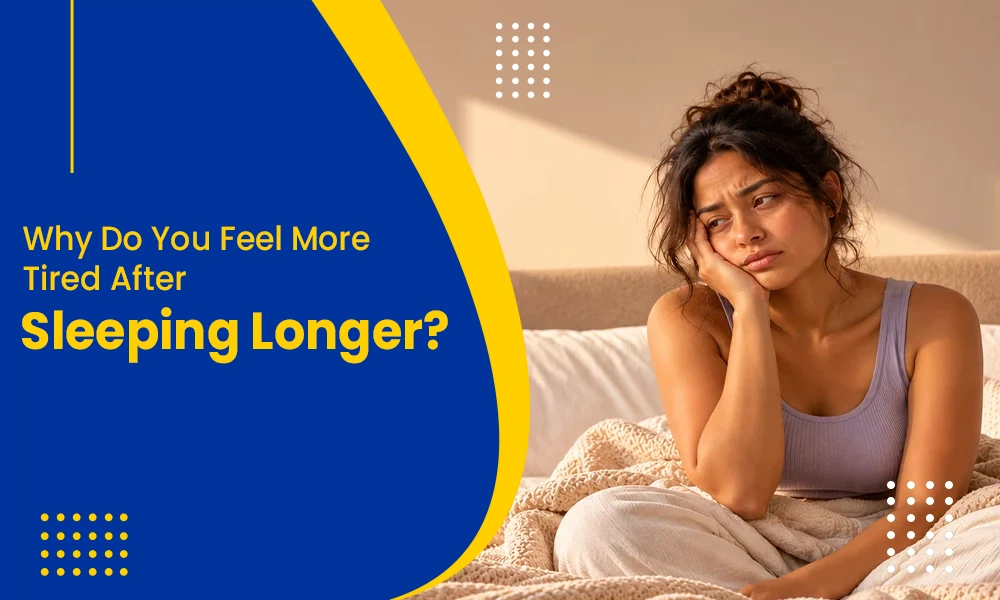
Have you ever been so tired that you slept for like 9-10 hours straight, and even if you woke up, you again wanted to go back to sleep? This might happen even if you went to bed on time and somehow managed to escape your pre-bedtime doomscrolling. Waking up may feel like a punishment on its own. Technically, sleep is supposed to rejuvenate us, and sleeping for that long should have made us feel fresher, but somehow we’re left with this sluggish feeling that just won’t go away.
While the popular belief is that sleep does recharge the body, more sleep doesn’t always mean better quality sleep. There are times when sleeping longer can surprisingly leave you more exhausted than before. It could be that your body clock, sleep quality or general health condition are not working in your favor. The relationship between your sleep and energy is not as linear as you might assume. It’s a little more complicated than simply counting the hours you spent in bed.
Sleep Inertia and Grogginess
One of the most common reasons why some individuals may feel so groggy after waking up from a long sleep may be sleep inertia. Sleep inertia is a temporary state of cognitive and motor confusion that an individual experiences immediately after they have woken up. Individuals who experience sleep inertia tend to feel less alert, mentally sluggish, and groggy.
Think of it as a little lag that your phone may sometimes experience. While your brain isn’t truly switched off during sleep, it may still sometimes struggle with fully waking up for a few minutes after you are up. Sleep inertia gets a little more pronounced when you wake up from deep sleep, specifically when you’re in the slow-wave sleep (SWS) stage. During SWS, your brain activity is mellow compared to when you’re in the rapid-eye movement (REM) stage.
This might explain why sometimes sleeping longer can make you groggy and make it difficult for you to wake up. This can especially happen if you have an inconsistent schedule and you have accumulated a bit of sleep debt.
Your Circadian Rhythm Being Out of Sync
The body runs on an internal clock, the circadian rhythm. It decides when sleepiness shows up, when body temperature drops, and when hormones shift around. If one sleeps from 11 p.m. until noon, that clock can be shoved sideways. The wake-up lands at a point the body wasn’t ready for. A weekend of that, then Monday arrives, and everything feels off, like jet lag without any flight. That’s a mild, homemade version of circadian rhythm disruption.
The sleep-wake cycle gets sloppy after that. Sleepiness turns up later the next night, bedtime drifts, the alarm feels cruel, and the long lie-in starts to look like the only fix. Round and round.
Sleeping longer on Saturday, then again on Sunday, means Monday’s alarm hits a body still running on weekend time. Sleeping longer once or twice is no big deal, but as a habit it keeps nudging the clock later. So it’s a loop, really. Late nights push the wake time back, and the late wake time pushes the next night later.
Underlying Sleep Disorders
Here’s the bit that gets missed. Sometimes the long night isn’t the cause at all. It’s the symptom.
If sleep keeps getting broken up due to factors like tiny wake-ups, snoring, a hot room, or your phone buzzing at 3 a.m., the body never collects the full benefit of sleep. So it asks for more hours to make up the difference. Ten hours of poor sleep quality can feel a lot worse than six solid ones.
That’s the catch with sleeping longer as a fix. Sleeping longer on top of broken sleep just means more hours of the same problem, and the tired feeling stays put.
Sleep apnea is the classic example of an underlying condition affecting your sleep. The airway narrows or closes, breathing stalls for a few seconds, and the brain drags the person partly awake, over and over. Most people never remember it happening. They just know that waking up tired is the default setting now, no matter how long they stayed down.
Factors like restless legs, insomnia that comes and goes, and alcohol close to bedtime can all chop the night into pieces. The weird twist is that the fix for tiredness sometimes isn’t more sleep at all, it’s actually getting sleep that’s better in quality.
Persistent Fatigue Due to Deficiencies
Here’s where the two things get tangled together. The link between oversleeping and fatigue runs both ways. Tired people sleep more, and people who sleep more can end up even more worn out.
The brain feels cloudy, focus slips, and mental fatigue shows up by lunchtime. Mood dips a bit too. Strangely, it can look a lot like sleep deprivation, even though the person technically got plenty of time in bed.
Daytime energy levels end up swinging all over. A decent burst after coffee, a crash around three, then a second wind at 11 p.m. that wrecks the next night all over again.
Medical professionals use the phrase excessive daytime sleepiness when someone can barely stay awake during the day despite a full night. It’s different from ordinary tiredness, and it deserves attention if it sticks around.
When Should You Seek Professional Help?
Occasionally feeling tired even after sleeping for longer hours is fine, sometimes people just have days like those and wake up on the wrong side of the bed. Daily fatigue is a different thing from one slow morning. But if it’s daily, if somebody needs nine, ten, eleven hours and still feels flat, then that’s something you should be bringing up with your primary care provider.
Persistent fatigue that doesn’t budge after a full night is one of the most common reasons people end up booking an appointment. Unrefreshing sleep is another flag, meaning a whole night that somehow doesn’t feel like rest.
The list of possible causes is long. It could be sleep apnea, depression, thyroid trouble, low iron, drowsy side effects from certain medications, and hypersomnia, which is the medical term for sleeping far too much.
Depression deserves a mention here because it often looks like this. Heavy tiredness, getting out of bed feels enormous, and sleep becomes a kind of escape hatch. If that sounds familiar, talking to a doctor or someone trusted is a good move.
Some studies link regular long sleeping with things like diabetes, obesity, and heart problems. Worth knowing, but the research hasn’t shown that the sleep itself causes them. Quite possibly something underneath is driving both. Nothing to spiral about over a few lazy weekends.
Small Habits That Can Help
Nothing fancy here, and none of it works overnight. The fatigue tends to ease gradually as the schedule settles, not in a single night. People who catch themselves sleeping longer than they need, week after week, usually do best by changing the routine around sleep first and the hours second.
A steady wake time is the big one, weekends included. It sounds boring, and it works better than most gadgets. Daylight soon after waking helps the clock reset, even ten minutes by a window.
Cutting the lie-in down slowly tends to go better than going cold turkey. Fifteen minutes earlier, hold it for a few days, then another fifteen.
Long afternoon naps can wreck the night, so keeping them short (or skipping them) is usually wise. A cooler, darker bedroom helps too. It’s good to limit your caffeine to early in the day, not late. It’s also advisable that alcohol be kept away from bedtime, since it breaks sleep up even when it feels sedating.
And if none of that moves the needle after a few weeks, that’s the signal to get things checked rather than keep guessing.
Frequently Asked Questions
1. Is sleeping more than nine hours bad for health?
2. How long does that foggy feeling last?
3. Can sleeping longer cause headaches?
4. Is oversleeping a sign of depression?
It can be, but not always. Long sleep plus low mood and heavy fatigue is worth mentioning to a doctor.