Think of your weekly work pattern and habits. You wake up in the morning, say around 7 AM, because you have commitments throughout the week. You spend your day at work or in university, occupied with work. Then when it’s time for dinner, you mostly try to have it between 8 PM and 10 PM, doomscroll a little on your phone, and then finally fall asleep. Most of your week might go like this if you have a consistent schedule. Then comes Friday, bringing with it a deviation in your schedule. You may end up staying up till like 3 or 4 AM on a Friday and sleep in on a Saturday. After all, most of us deserve that little break now that the weekend is here. We’re all prone to think in that direction.
Staying in on weekends might feel like a little treat, but then getting out of bed on a Monday morning feels like you are in a different time zone and your body is completely jet-lagged. You end up just powering through the Monday blues and morning. We all accept this fate, but it points to something going inside our bodies that we constantly keep messing up every weekend, and that’s called our circadian rhythm.
Our bodies don’t always work according to the clock on our walls. Sure, we like to organize our lives according to the hours on the clock, but our bodies have their own cycle. Our internal clocks also span over 24 hours, and this internal clock influences our several physiological mechanisms. Any disruption in this clock can affect our body greatly. These disruptions lead to circadian misalignment, and that is what we will get into in this article.
What is Circadian Misalignment?
There’s this thing called circadian rhythm, and it’s basically a 24-hour loop running inside almost every cell in the body. It decides when a person should feel alert, when they should feel sleepy, when digestion should slow down a bit, and when body temperature naturally dips before sleep. Most of this happens without a single conscious decision from anyone.
Circadian misalignment shows up when that internal loop and the outside world stop agreeing with each other. Say the clock is telling you to sleep now, but the environment around is saying to keep going, the lights are on and work isn’t done. That gap between the two, small at first, then not so small, is where a lot of the trouble tends to start.
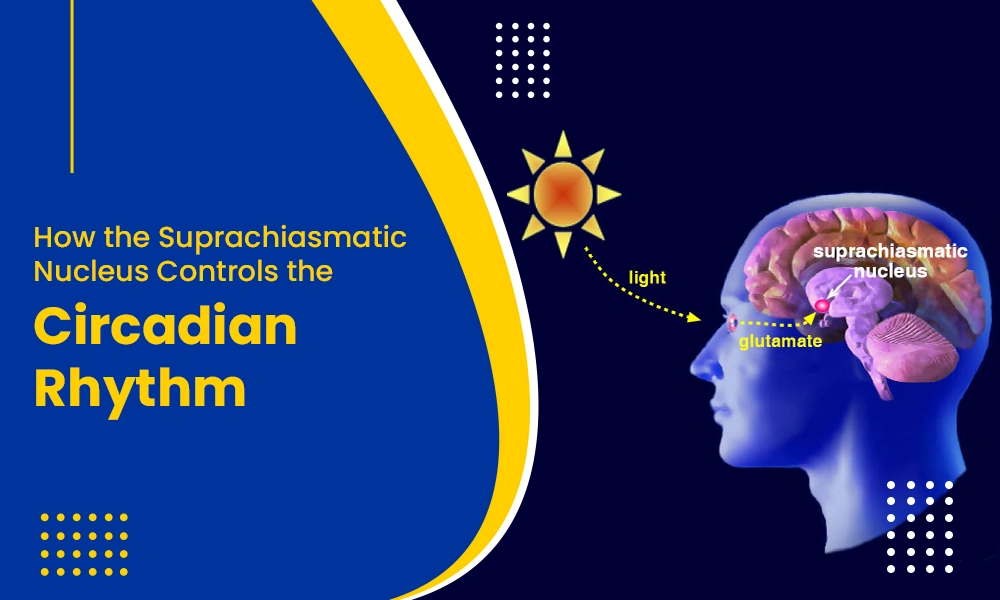
The circadian rhythm is mostly regulated by a region in the brain called the suprachiasmatic nucleus. One of the strongest signals that your internal clock gets affected by is light. The daylight helps tell our brain that our body should be staying awake at the time, and darkness that comes with evening helps our body make that biological transition toward sleep.
As we mentioned, our day-night biological cycle not just affects our sleep but other mechanisms as well. The tissues in these specific mechanisms also have their own timings and cues, so when our suprachiasmatic nucleus sends different signals and their own clock says something, these mechanisms start experiencing the effects of circadian misalignment.
Also, it isn’t just “being tired.” It’s a timing conflict between biology and schedule, not a mood, not a preference, not laziness.
What Causes Circadian Misalignment?
There are a few common reasons, like working nights or rotating between day and night hours being a big one, the kind of schedule that asks a person to be awake exactly when their biology expects darkness and stillness. Jet lag counts too, even though that one usually sorts itself out within a week or so. Some people also just have a naturally delayed clock and end up quietly fighting normal daytime hours their entire lives, university onward, sometimes without ever naming what’s actually going on.
Then there’s blue light.Screens late at night, phones, laptops, whatever’s closest to the pillow, confuse the brain into thinking it’s still daytime out there. Which delays melatonin release. Which delays sleep onset. Which then pushes everything else later too. It’s more of a domino effect than a single clean cause.
Not everyone with an irregular schedule develops this in a way they’d notice. Some people adapt strangely well, almost annoyingly well. Others fall apart after two rough nights. There’s no tidy rule here.
Effects of Circadian Rhythm Disruption
The most noticeable sign of a disruption you will see is that there is a mismatch between when you want to go to sleep and when you actually need to go to sleep. Due to this mismatch, you might experience a sort of fatigue that doesn’t lift after sleep, or your sleep might not feel like a real rest even if you slept for a sufficient amount of hours. Nighttime wakefulness fits in here too, lying there at 1 AM, brain fully switched on, body exhausted but somehow not shutting down.
Some people describe that they experience a kind of fog. Others describe irritability that seems to come out of nowhere, snapping at something small. Some just feel generally “off” and can’t explain it any better than that, which is honestly the most common description.
Irregular sleep and fatigue tend to travel together more often than not. One feeds the other, and it rarely shows up as a single isolated symptom sitting by itself.
Here’s a small contradiction, though, some people going through this misalignment sleep a completely normal number of hours and still wake up feeling wrecked. So counting hours alone clearly doesn’t tell the whole story here.
Long-term Effects of Circadian Rhythm Disruption
This is where things stop being abstract. An individual’s concentration drops, reaction time slows down without anyone quite noticing when it started, mood gets shaky for no obvious reason, and decision-making gets noticeably worse when your internal timing system gets messed up.
The effects of circadian misalignment aren’t limited to feeling sleepy during the day. They stretch into mood, focus, appetite, and even how the body handles blood sugar over longer stretches of time. None of this happens overnight, it builds slowly, almost sneakily.
There’s a social layer too, one people rarely mention out loud. Anyone whose clock is out of sync with normal daytime hours ends up constantly explaining themselves about why they’re groggy at 10 AM and why they can’t fall asleep at 11 PM like seemingly everyone else around them.
Circadian Timing and Overall Health
Circadian rhythm and overall health are more tangled together than most people assume going in. It touches hormone release, temperature regulation, and even how sluggish or active digestion feels at different points across the day. Sleep-wake regulation is really just one output of a much bigger system, not the whole system by itself.
So when someone says “my sleep schedule is off,” what’s often actually happening runs deeper than an entire day-night biological cycle quietly running out of step with actual daylight and actual darkness outside.
This, stretched across long enough periods, has been linked with more than just poor sleep alone, mood changes, metabolic shifts, and a kind of low-grade burnout fatigue that doesn’t respond to simply sleeping in on weekends.
The effects of circadian rhythm disruption tend to show up quietly first, then all at once, which is part of why people brush it off for so long before addressing it.
When Do You Need Clinical Help?
Sometimes this isn’t a one-off bad week that fixes itself. Some people deal with an ongoing circadian rhythm disorder, which is when there’s an established pattern where the sleep-wake cycle stays misaligned no matter what gets tried, night after night, month after month. Delayed sleep phase is one version of this. Long term shift work is another common path toward it, built up gradually over years of rotating schedules and inconsistent daylight exposure.
At that point, casual fixes like dimming the lights earlier or cutting caffeine after noon sometimes aren’t quite enough by themselves. Some people end up needing more structured support, whether that’s light therapy timed to the morning, deliberate melatonin timing strategies, or in certain cases, medication prescribed specifically to manage excessive daytime sleepiness tied to circadian timing issues, particularly for people working overnight hours or those with a formally diagnosed sleep wake disorder. That conversation usually happens with a medical professional or a sleep specialist rather than getting figured out alone, since the underlying cause differs so much from person to person, and self-adjusting doses of anything is rarely a good idea.
Bottom Line: Does Circadian Misalignment Matter?
It matters, though not in an alarm-bells kind of way. It matters slowly and cumulatively, the way small debts add up without anyone checking the total. A night or two of poor alignment probably won’t wreck much of anything on its own. Years of it, though, like a decade of overnight hours, or chronic late-night screen exposure, or brushing off restless nights, add up in ways that are hard to undo quickly.
Biological rhythm and sleep aren’t really separate systems fighting each other for control. They’re supposed to move together, in step, most of the time. When they stop doing that, the body notices even if the mind has convinced itself everything is fine.
Natural body timing isn’t something most people think about until the day it stops cooperating. Then, suddenly, it’s the only thing anyone can think about, and circadian misalignment, once named, is hard to unsee in hindsight.
Frequently Asked Questions
1.Is circadian misalignment the same as insomnia?
No. Insomnia is trouble sleeping in general. Circadian misalignment is a timing mismatch, the urge to sleep and the actual clock aren’t syncing up.
2.Can late-night screen use alone cause circadian misalignment?
Not usually on its own, but it’s a major contributor, especially with heavy nighttime exposure.
3. Does circadian misalignment go away by itself?
Sometimes, if the schedule settles back to normal. Long term irregular hours or diagnosed disorders often require more active management.
4. Who's most likely to deal with this?
People who work nights are often on the road for long trips and have a naturally late sleep clock.
5. Is medication always necessary?
No. Many cases improve with light exposure changes and steadier sleep timing. Medication tends to matter more for persistent, diagnosed cases.