
It always feels like jet lags are out to get us. Even if the surroundings and time zones change around us, our bodies still run on the old clock, and we’re destabilized. Now, you don’t always need drastic time zone shifts to experience this interference. Some individuals might be actively experiencing a milder version of these jet lags every other week or so.
Staying up till the witching hours on weekends, having to wake up early on Monday, trying to squeeze in as many naps as possible, and scrolling on your phone way past your bedtime can all send mixed signals to your body about your sleep and wake time. These mixed signals might actually end up greatly confusing your body about when it’s time to be awake or rest. This is when your sleep rhythm loses its consistency. An occasional late night here or there isn’t necessarily harmful, but repeatedly having inconsistent bedtimes can affect your body more than you realize.
Your Body’s Natural Sleep Rhythm
Most of life has adapted to the 24-hour cycle. Your sleep satisfaction and literally any other mechanism is related to this cycle. The body’s sleep rhythm is closely tied to their circadian rhythm, which is the internal (approx.) 24-hour cycle. This rhythm helps your body understand when it’s time to be awake and when it should prepare to rest and sleep.
A tiny bundle of nerves called the suprachiasmatic nucleus (SCN) is responsible for keeping this clock on track. Light is one of the most important cues that your body can get to settle its clock, and the SCN receives light cues through the eyes. In the morning, this very same light helps your body understand that the day has begun. As daylight decreases by evening, your body starts preparing for rest.
Slippery Slope of a Disrupted Sleep Schedule
A disrupted sleep schedule rarely starts with one big event. It’s usually a pile of small ones. A new job with odd hours, a newborn, a few late nights of binge-watching, and a long flight that never quite wore off. That’s how irregular sleep patterns build up. A bit here, a bit there. Nothing looks that bad on any single day, which is sort of the problem. And the body doesn’t adjust quickly. People assume they can just “go to bed earlier tonight” and fix it. While that may work sometimes, often it doesn’t, and the clock stays stubborn for days.
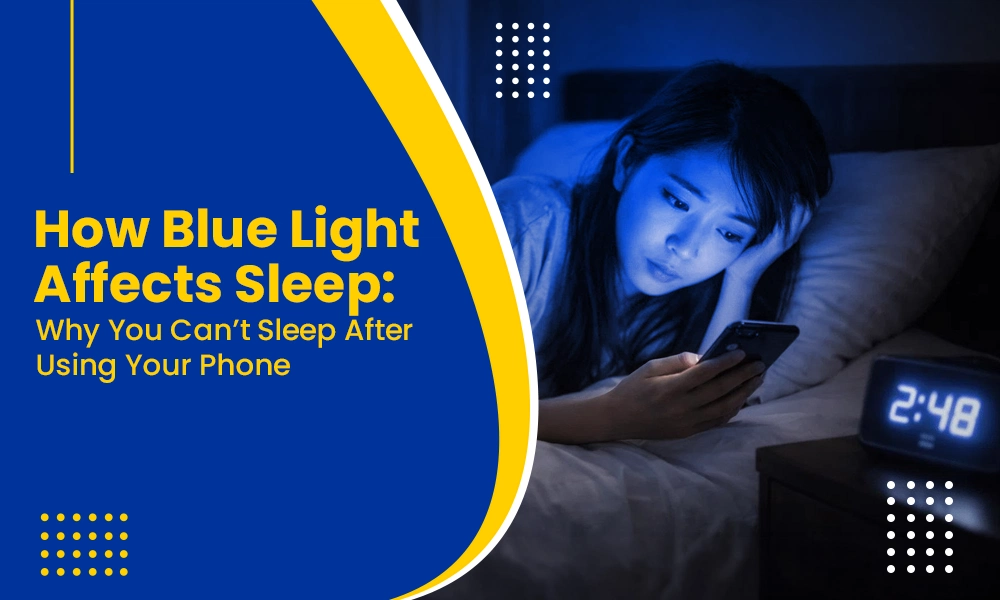
Phone usage before bed gets blamed for everything, and some of the blame is fair. Screens give off bright, blue-leaning light, and that can push melatonin production later into the night. The brain reads it as late afternoon. The hormone shows up late, and sleep shows up even later. Then there’s the scrolling itself. One more video. Ten more minutes. Suddenly it’s 1 a.m., and your thumb is still going. Phones can push the sleep rhythm later without anyone really noticing it happen.
But they’re not the only culprit. Late caffeine does its own damage. So does alcohol, which knocks people out fast and then wrecks the second half of the night. Stress too. Irregular meals. Even a bright kitchen light at midnight can affect your body clock temporarily.
Daytime Fatigue Due to a Disrupted Sleep Rhythm
You may consistently feel tired despite sleeping for a good amount of hours. Heavy eyelids, slow thinking, the feeling of moving through water. It can also be strangely specific. An individual may feel sleepy at 2 p.m. and wired at midnight. They may be genuinely tired but somehow unable to switch off their brain. That mismatch is a big clue that the clock has drifted.
Poor sleep quality shows up in odd places. Individuals may experience irritability, headaches, and sugar cravings and have slower reactions, which matters a lot behind the wheel. Some people describe unrefreshing sleep, where they spend a full eight hours in bed and still wake up feeling flattened. That one gets overlooked because the hours look fine on paper. The quality isn’t.
Sleep disturbances pile on top of it, like waking at 3 a.m., light, restless sleep, or dreams that feel too busy to rest in. Sleep debt builds quietly through all of this, and the body keeps the tab even when the mind insists it’s coping fine.
When Sleep Disorders Disrupt Sleep Rhythm
Sometimes it isn’t just habits. Circadian rhythm disorders are real, diagnosed conditions. There’s a delayed sleep phase, where the body clock runs so late that falling asleep before 3 or 4 a.m. feels impossible. There’s shift work disorder, which hits nurses, warehouse staff, drivers, and basically anyone stuck on nights.
If the sleep cycle stays off for months, that’s worth a real conversation with a doctor. Especially when excessive daytime sleepiness is involved, like nodding off in meetings or fighting to keep eyes open on the road. That’s not a “try a lavender spray” situation. A sleep study can sort out whether something else is going on, like sleep apnea or narcolepsy, which can look surprisingly similar from the outside.
Wakefulness Medications for Irregular Sleep Patterns
Some primary care providers suggest wakefulness promoting medicines when sleepiness is severe and tied to a diagnosed condition. Modafinil is one of the best-known ingredients on the market right now.
Modaheal 100 mg and Modaheal 200 mg are branded modafinil tablets. Modafil MD 200 mg is another modafinil option. These medicines are designed to promote wakefulness during the day, not to knock anyone out at night, and they work differently from classic stimulants.
Modaheal 100 mg is the lower strength, sometimes where a medical professional starts or adjusts. Modaheal 200 mg and Modafil MD 200 mg are the strengths commonly discussed for daily use. The dose and the timing, usually mornings, are up to the prescriber.
And that’s the part that gets glossed over. These tablets don’t fix a broken sleep cycle. They can lift the fog of sleepiness, but they don’t reset the body clock or cancel out a pile of lost sleep.
They also have side effects. Headache, nausea, nervousness, and trouble sleeping are the usual ones, and rare serious skin reactions have been reported. Modafinil can also interact with other medicines, including hormonal birth control.
What Can Help Restore Your Sleep Rhythm?
Small repeated changes in your schedule seem to pay off most of the times. Waking up at about the same time every day, weekends included, is probably the biggest lever. Getting outside in morning light helps the body clock catch on. Dimming the lights in the evening helps too.
Keeping the phone out of reach for the last half hour or so before bed gives melatonin production a fair shot. Caffeine is better cut off by early afternoon. Long naps late in the day can quietly ruin the night.
Rebuilding a sleep routine usually takes a couple of weeks of being annoyingly consistent. Not perfect, but just consistent enough.