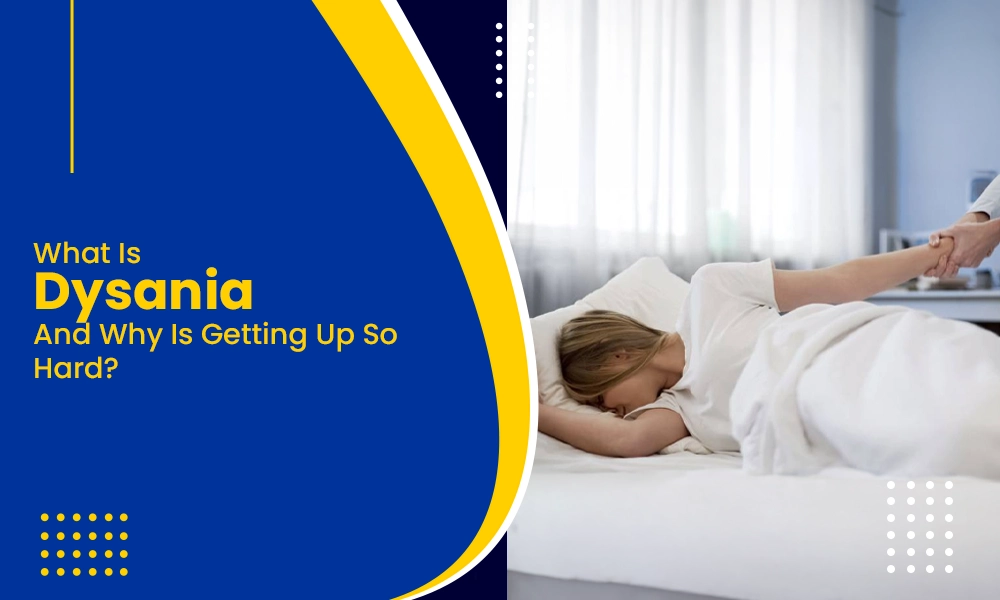
The alarm just went off at 7 a.m. You know you should probably get up. You may have even had eight hours of sleep that night but the thought of getting out of your warm bed as soon as you open your eyes is more than you can bear. You pressed snooze twice. It’s now 7:45, but you’re still lying there, trying to decide if you should get up. If this sounds like something you’ve heard before, you may have heard of the word dysania.
It is important to keep in mind that dysania is not a medical condition or a different sleep disorder. It’s better to think of it as a statement about a sign or feeling that might have more than one cause.
Why does it exactly feel so difficult to get out of bed even if technically you spent enough time sleeping? The answer could be anything from normal morning grogginess and sleep inertia to not getting enough sleep, having an irregular body clock, having bad sleep quality, or having a health problem. Let’s get into the nitty-gritty of it.
What is Dysania?
In plain terms, it’s the extreme reluctance or outright inability to get out of bed after waking. Not the normal five-more-minutes kind. The kind where an hour, sometimes two, just disappears and someone’s still lying there staring at the ceiling wondering why their legs won’t cooperate.
It’s not officially a medical diagnosis, by the way. While physicians won’t write it on a chart, it’s a lived experience that almost everyone around you has experienced, they didn’t have a word for it.
Dysania meaning, if you want the more dictionary-ish version, is an inability or extreme reluctance to leave the bed after waking. Some people mix it up with clinomania too, which is more about wanting to stay in bed, kind of an obsession with the mattress itself.
The funny thing is it isn’t really about sleepiness on its own. Someone can sleep eight hours, feel “fine” technically, tell themselves they rested enough, and still not be able to make their body move.
Why Do Some People Have Difficulty Waking Up?
This is where it gets messy because there’s no single answer, and honestly that’s part of what makes it frustrating for people dealing with it. Sometimes it comes down to sleep inertia, that groggy fog right after waking where the brain hasn’t fully switched over yet. That fog usually lasts maybe 15 to 30 minutes for most people. But with dysania, that fog can stretch way longer, like it just refuses to let go.
Other times it’s depression. Actually a pretty big chunk of these cases circle back to depression somehow, low motivation, heaviness, and this weird gravity that pulls a person back down even when they’re technically awake and eyes are open.
Anxiety does it too. Weirdly, some people describe lying in bed almost panicking about the day ahead, which somehow makes them more stuck, not less. Like the brain freezes the body as some kind of defense mechanism.
Then there’s the physical stuff like thyroid issues, anemia, sleep apnea, and chronic fatigue syndrome. All of these mess with energy levels in ways that show up hardest right at that morning transition point.
And sometimes, honestly, it’s just bad habits stacked on top of each other for months. Late nights, inconsistent schedules, and too much caffeine too late in the day. It’s not always some deep medical thing going on. Sometimes it’s just chaos catching up with a person.
The Role of Your Internal Clock
There’s this whole sleep-wake cycle running in the background of the body, and this condition kind of throws a wrench into it. Like the internal clock says, “Time to be up now,” but the rest of the body never got the memo.
REM sleep matters here too. If someone’s waking up mid-REM instead of at a natural light-sleep point, the grogginess hits way harder. It’s basically bad timing, the alarm going off at exactly the wrong point in the cycle, catching the brain in the middle of something it wasn’t done with yet.
Circadian rhythm messes with things as well, obviously. Staying up late on weekends or scrolling on a phone at 1am can all of it throw the natural rhythm off, and then mornings just feel worse than they logically should, even after what looks like enough sleep on paper.
It’s strange because two people can sleep the exact same number of hours, and one wakes up fine while the other feels like they got hit by a truck. A lot of that comes down to timing, not just duration, which people rarely think about.
Dysania Is Not The Same as Morning Fatigue
This is the part people get wrong a lot, and it’s worth slowing down on. Regular tiredness you can fix with sleep, mostly. Dysania doesn’t always respond to that in the same way at all.
Someone could get a full night, still wake up, and just not be able to move. They’re not being lazy or undisciplined but are just stuck. There’s a gap between the mind being awake and the body agreeing to participate. There’s a difference between excessive morning tiredness that eases once you’re up and moving around, versus this heavier thing where getting vertical itself feels like the hardest task of the entire day.
Some people carry excessive daytime sleepiness through the whole day too, not just the first hour after waking, and that’s its own kind of exhausting on top of everything else.
Ordinary grogginess on its own usually clears up fast. This one doesn’t clear up fast. That’s kind of the whole distinction, if there’s one single thing worth holding onto here.
The Role of Your Mental State
Can’t really talk about people’s difficulty getting out of bed without bringing up mental health at some point.
A pretty significant portion of people dealing with dysania also have depression running underneath it, sometimes undiagnosed for years. It doesn’t mean everyone dealing with it is depressed, that’s not the claim being made here, but it shows up often enough to be worth paying attention to, especially if the bed-thing comes packaged with low mood, losing interest in stuff someone used to like, trouble focusing, and that whole cluster of symptoms.
Not trying to diagnose anyone reading this. Obviously no one can do that from just an article. However, if it’s persistent, it’s worth mentioning to an actual medical professional instead of pushing through it every single morning for months on end.
Sleep Quality Is More Important Than Duration
People obsess over hours slept. Eight hours, nine hours, or whatever the magic number goal is supposed to be this year according to some app. But sleep quality might matter more here than raw hours ever will.
Someone can sleep nine hours and still wake up wrecked if that sleep was broken, shallow, or interrupted constantly by things like sleep apnea. Sleep deprivation isn’t only about the clock, it’s also about not enough good sleep, a distinction that gets lost a lot in these conversations.
Some people technically spend enough time in bed but never actually get deep, restorative stretches of it. Waking up every hour without even remembering it the next day. That adds up quietly over weeks and starts looking a lot like dysania even if the label doesn’t quite fit yet.
Does Every Rough Morning Count As Dysania?
No, not really. Everyone has an occasional morning where getting up feels like climbing a mountain, especially after a rough week or a late night out. That’s just life, not a condition.
Struggling to wake up from the bed becomes something to look at more seriously when it’s constant, like most days, for weeks on end, and it’s actually interfering with work, relationships, or basic functioning. That distinction matters a lot actually. Difficulty getting up in the morning once in a while is not the same as the chronic version of this. One is annoying while the other reshapes the whole day, every day, quietly wearing a person down.
What Can Help With Dysania?
Light exposure right after waking seems to help a decent number of people, even just opening the curtains instead of staying in the dark scrolling on a phone for twenty minutes. Things like consistent wake times, even on weekends apparently, help reset things over a few weeks, according to most advice out there. Cutting screens before bed gets mentioned constantly too, though let’s be honest, most people ignore that one completely, including probably whoever’s reading this right now.
Some people find movement helps, not exercise exactly, but just standing up, stretching, and forcing blood to move before the brain has time to argue about it. None of this is a fix-all, though. If it’s tied to something physical or mental underneath, the actual root has to get addressed, not just the surface symptom of not being able to get up.
Frequently Asked Questions
1. What is dysania?
Extreme difficulty getting out of bed after waking, beyond normal grogginess.
2. How is it different from regular morning grogginess?
Regular grogginess fades fast; this one is more persistent and severe.
3. Is dysania a real medical condition?
Not officially diagnosed, but doctors do recognize it as a real, common experience.
4. Should someone see a doctor for dysania?
If it’s happening a lot and interfering with daily life, yes, it’s worth talking to your healthcare provider.
5. What leads to experiencing difficulty getting out of bed?
Depression, anxiety, sleep disorders, thyroid problems, anaemia or poor quality of rest can cause people to struggle to get out of bed.