Two-thirds, around 66%, of Americans drink coffee every day. For some individuals, that cup of joe is their lifeline. If we look at caffeine rather than just coffee, then even more individuals consume it on a daily basis. Caffeine is able to provide our brains and bodies with a boost that we heavily require some days in our busy lives.
While caffeine is plenty helpful, it’s almost like a double-edged sword. Yes, caffeine helps increase our concentration, can lower the risk of neurodegenerative conditions, and can also speed up our metabolism. However, there are cons to it as well, especially when it comes to sleep. Caffeine has a funny way of helping us be productive the day and then frustratingly keeping us awake at night.
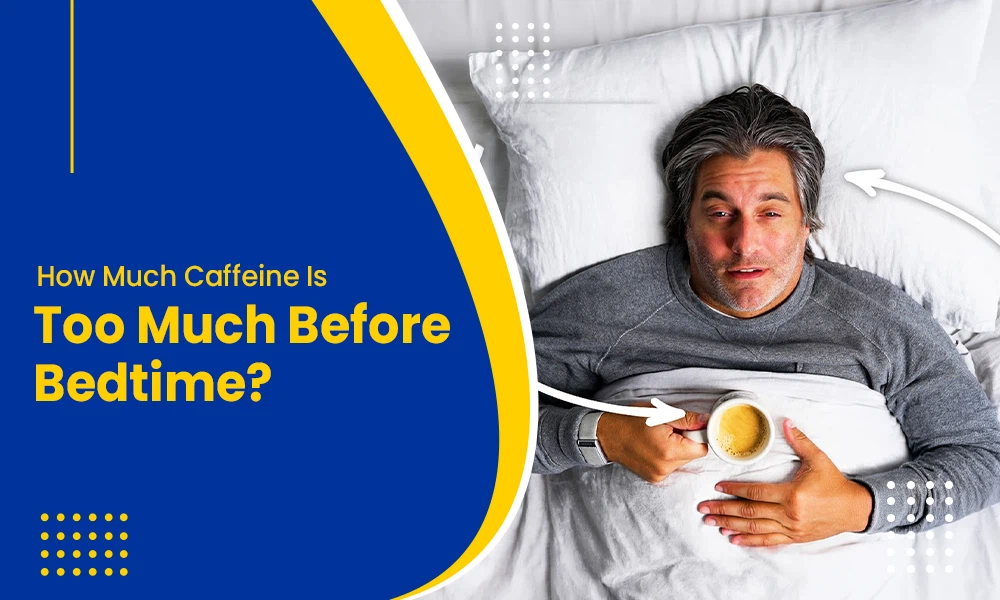
Yes, a morning cup might just get you moving, but an evening cup can end up in you staring at the ceiling past midnight, counting sheep, and trying to go to sleep. Caffeine has an infuriating way of lasting in our bodies for longer than we expect. You might have a cup at 5pm thinking it’s still pretty early in the day, but the caffeine might last in your system. So, how much caffeine is too much before bedtime?
How Does Caffeine Affect Your Sleep?
Caffeine primarily blocks adenosine, the chemical that builds up all day and makes a person feel sleepy. Block it and the sleepy signal gets muffled before bedtime. The body still needs sleep, but because the caffeinated beverage has blocked adenosine, it just can’t feel the need yet.
The caffeine effects on sleep show up in a few ways before bedtime. Falling asleep takes longer. Deep sleep gets thinner. REM sleep, the dreamy stage, tends to get trimmed too, and some people notice their dreams going quiet or feel oddly flat in the morning. Then there’s waking at 3 a.m. for no reason at all, which is classic nighttime sleep disruption.
It also scrambles the sleep cycle. A normal night runs through light sleep, deep sleep, and REM in loops of about ninety minutes. A stimulant can chop those loops up, so the night feels long but doesn’t repair much. The link between caffeine and sleep quality is sneaky for exactly that reason. The damage is easy to miss while it’s happening.
There’s the circadian rhythm side as well. The body clock likes a steady pattern, and a late-day stimulant can nudge it later. Bedtime drifts, the sleep-wake cycle gets messy, and everything shifts a bit.
Caffeine Intake Before Bed
So, where should the line be drawn before bedtime? Health bodies in the US and UK mostly land around 400 mg a day for healthy adults, which is about three or four regular cups of coffee. Pregnant women are usually told to stay closer to 200 mg. But that’s a daily number, timing isn’t present in the equation, which is where problems might start cropping up.
A well-known sleep study out of Detroit gave volunteers 400 mg at bedtime, three hours before, and six hours before. Every single timing disrupted sleep. Even the six-hour dose cut total sleep by more than an hour. The odd part was that most people didn’t notice. They felt fine. They just slept worse.
A newer, smaller trial from 2025 tried a lower dose too. Around 100 mg, roughly one cup, four hours before bedtime didn’t show a clear effect. The 400 mg dose caused trouble even twelve hours out. So the amount matters about as much as the clock does. Maybe more.
How Long Does Caffeine Last In Your Body?
How long caffeine stays in your system depends on the person, and the range is wider than most expect. The average half-life is around five hours, but individuals land anywhere between roughly 1.5 and 9.5 hours.
A 200 mg coffee at 3 p.m. leaves about 100 mg in the body by 8, and around 50 mg near 1 a.m. for an average person. People who have a slow metabolism may actually store more caffeine than that. Smokers clear it faster. Birth control pills and pregnancy can slow down the metabolism of caffeine, sometimes by a lot.
So “coffee at 6 p.m. and I sleep fine” might be true for one person and completely false for the person sitting next to them.
Blue Light Exposure Before Bed
If caffeine was not enough of a problem, there comes blue light before bedtime with its ability to make your brain think it’s not time to sleep yet. Blue light exposure before bed has its own effect. Bright screens tell the brain it’s still daytime, more or less. Scrolling on your phone “for ten minutes” in bed turns into forty without anyone really deciding that.
So a person might have coffee still floating around from the afternoon, plus a screen shining in the face, and then wonder why they are having difficulty falling asleep. It’s not much of a mystery when laid out like that. Although it feels like one at 1 a.m.
Caffeine Intake and Sleep Deprivation
A bad night leads to a worse day, usually. Sleep deprivation builds up quietly. Morning fatigue hits hard. Sleep inertia, which is that groggy can’t-think stretch after waking, can drag on for longer than normal because your body couldn’t rest properly. Some people end up with persistent daytime fatigue that never quite lifts.
So what happens next? Of course, you get heavy-handed with your caffeinated beverage in the morning because you are still experiencing the sluggish effects of your inadequate sleep. The need for caffeine may extend from early morning to later in the day as well. This is how you might end up consuming caffeine before bedtime and continue feeding the loop that has been built. It’s a dumb cycle, which is easy to fall into but harder to spot from the inside.
Where Do Wakefulness Medications Fit In?
Armodacare, Modacare, and Modalert are all branded generics of armodafinil and modafinil. They’re wakefulness promoting medicines, not just stronger coffee. They’re typically recommended for excessive sleepiness linked to narcolepsy, obstructive sleep apnea, and shift work disorder.
Armodacare is the armodafinil one, sold in strengths like Armodacare 150 mg and 250 mg. Modacare 200 mg and Modalert 100 mg contain modafinil. The dose will typically be your healthcare provider’s call, based on the condition, other medicines, and how the person tolerates it.
Timing matters with these too. Armodafinil has a half-life of roughly 15 hours, and modafinil is in a similar range of about 12 to 15, so a late dose can hang around well into the night. That’s one reason medical professionals often point people toward morning dosing, with some exceptions for shift workers.
Plenty of people already running on a lot of caffeine should mention it to their physician, because stacking the two can mean jitters, a racing heart, or anxiety. And these medicines don’t replace sleep. Insomnia isn’t what they’re approved for, and using them to push through chronic sleep loss just hides the real problem for a while. If you are experiencing any of the above mentioned sleep disorders, then you should have a chat with your healthcare provider, but daytime sleepiness caused by lack of sleep is usually not a situation where these medications are recommended.
Healthy Sleep Habits That Help With Sleep Deprivation
For most people, an eight to ten hour gap between the last coffee and bedtime is a safer bet than the old “nothing after 5 p.m.” rule. Bigger doses need a bigger gap. Sensitive people might need even more, and that’s fine.
A steady wake-up time does more for the body clock than most gadgets. Morning light helps too, even ten minutes outside. Screens can go away an hour before bed, though honestly that one’s hard, and plenty of people fail at it.
Decaf is an option for the evening. Just keep in mind that even decaf has a little caffeine in it, usually a small amount, but not zero. And if sleep stays rough for weeks, even after the coffee habit is sorted, then that’s a conversation you can have with your healthcare provider.
Frequently Asked Questions
1. How many hours before bed should coffee stop?
Around 8 to 10 hours works for most people. Larger doses or slower metabolizers may need longer.
2. Is 400 mg of caffeine safe?
Usually fine as a daily total for healthy adults, but taken close to bedtime, it can wreck sleep.
3. Does one small afternoon cup matter?
One cup, about 100 mg, four hours before bed showed little effect in a small trial. Some people are just more sensitive.
4. Can Armodacare, Modacare, or Modalert replace sleep?
These are medicines that are typically recommended only for specific conditions, and the body still needs real sleep. You cannot take these to replace it.
5. When should someone see a doctor?
If tiredness or poor sleep lasts for weeks, even after cutting back on caffeine.