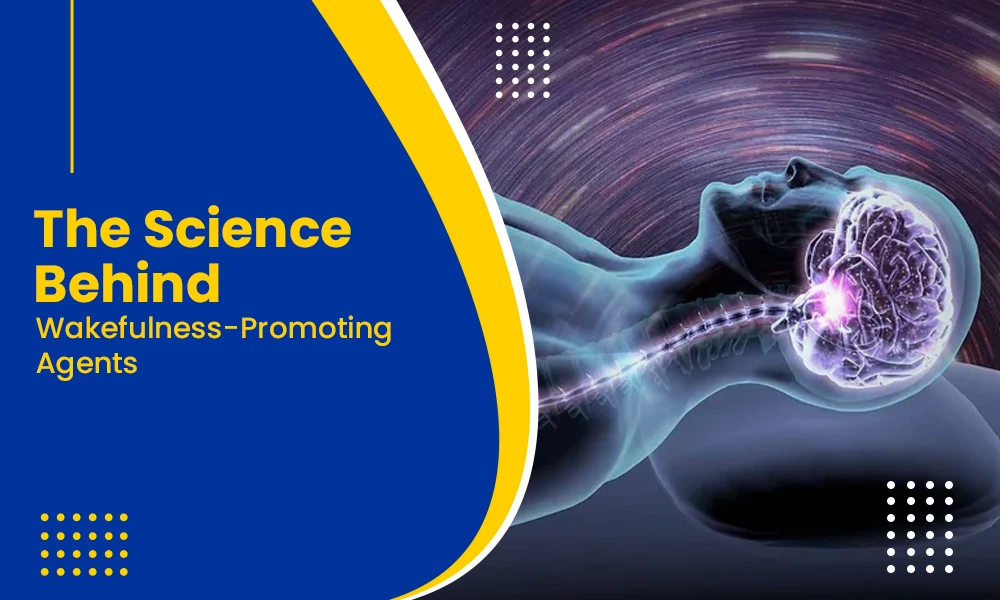
Being awake, alert, and able to function in our 24-7 world is a challenge in the face of the fatigue and sleepiness engendered by long work hours, unusual work schedules, sickness, and other factors. Development of effective treatments to combat fatigue and sleepiness requires an understanding of the neurobiology of wakefulness. Wakefulness-promoting agents are not stimulants like caffeine or amphetamines. They work differently, or at least that’s what the research keeps circling back to, even though nobody seems 100% sure how differently.
Modafinil is probably the one you’ve heard of. Maybe under the brand name Provigil, maybe from a college roommate who swore it got them through finals week without crashing. There’s also armodafinil, which is basically the more potent cousin, same family, slightly different molecular arrangement. And then you’ve got older stuff like amphetamine-based drugs that get used for narcolepsy too, but those work through a completely different pathway that’s more “brute force” than anything subtle. Let’s get into what’s actually happening in the brain, or what scientists think is happening, because a lot of this is still kind of fuzzy around the edges.
Wakefulness isn’t a switch, it’s more like a dimmer that’s controlled by like six different people at once
This is the part that trips people up. You’d think being awake is just… awake, on or off, like a light switch. But no. Your brain has multiple systems all pushing and pulling on your alertness at the same time. There’s the hypothalamus doing its thing with orexin (also called hypocretin), there’s the histamine system, dopamine, norepinephrine, and even glutamate gets involved somewhere in there.
Wakefulness-promoting agents don’t hit just one of these. Modafinil especially seems to nudge several systems at once, which is actually why researchers had such a hard time figuring out its mechanism for years. Like, it was approved for use before anyone really nailed down exactly how it worked. Which sounds sort of backwards when you say it out loud but that’s pharmacology for you sometimes.
The dopamine thing, and why it’s not quite the same as stimulants
Modafinil does block dopamine reuptake, meaning more dopamine hangs around in certain parts of the brain longer than it normally would. That sounds exactly like what amphetamines do, right? Except the way it does it is weaker and slower, more like it’s tapping the brakes on dopamine clearance rather than flooding the system.
This matters because pure stimulants tend to come with that jittery, heart-racing, can’t-sit-still feeling. Modafinil users report something different – more like a quiet, steady alertness. Not “wired,” just… awake. Individual brain chemistry is annoyingly variable.
There’s also this histamine angle that keeps coming up in studies. The tuberomammillary nucleus pumps out histamine when you’re awake, and modafinil seems to activate this pathway too, maybe even more directly than the dopamine stuff. Some researchers actually think histamine might be the primary mechanism and dopamine is more of a side effect.
Orexin, the sleep-wake conductor nobody talks about enough
Orexin neurons live in a tiny part of the hypothalamus but they punch way above their weight class. These are the cells that, when they die off or stop functioning properly, cause narcolepsy. Like, that’s literally the disease – your orexin system stops doing its job of keeping wakefulness stable, and you just… fall asleep at random. Mid-sentence sometimes.
Wakefulness-promoting agents seem to work partly by supporting or stimulating this orexin pathway, though again – and I keep saying “seems” and “though” a lot here because that’s genuinely the state of the science – it’s not like a direct one-to-one replacement. It’s more that these drugs create conditions where the existing wake-promoting circuits function better, rather than injecting artificial wakefulness from outside.
Which honestly makes sense if you think about narcolepsy treatment specifically. The goal isn’t to override the brain, it’s to help what’s left of the system work properly.
Why these drugs got called “smart drugs”
So there’s this whole cultural thing where modafinil got picked up by tech workers, students, people pulling all-nighters, and it got this reputation as a cognitive enhancer. Nootropic communities online talk about it constantly. But the actual research on cognitive enhancement in healthy, non-sleep-deprived people is way weaker than the hype suggests.
Most of the solid data comes from studies on sleep-deprived populations, like Shift Workers or people with sleep disorders. In those groups, wakefulness agents clearly help with alertness and some aspects of executive function. But in people who are already well-rested? The effects are much smaller, sometimes barely there. A few studies even suggest it can make certain types of creative or flexible thinking slightly worse, which is not what the “smart drug” marketing implies at all.
I think this gap between the reputation and the actual data is one of the more interesting parts of the whole topic. Everyone wants a pill that makes them smarter and this got treated as that pill, even though the original research was about narcolepsy and shift work sleep disorder, not exam performance.
The half-life problem, and why timing matters more than people realize
Modafinil has a fairly long half-life – somewhere around 12 to 15 hours depending on the person, which is actually kind of a big deal for how it’s used. Take it too late in the day and you’re looking at disrupted sleep that night, which is ironic for a drug meant to help with alertness in the first place. There’s a metabolic pathway involving liver enzymes (CYP3A4 and a couple others) that breaks it down, and this is part of why drug interactions with modafinil can get complicated, especially with hormonal medications.
Armodafinil, being the R-enantiomer version (basically one specific mirror-image half of the modafinil molecule), tends to stay active a bit longer and some people find it gives steadier effects throughout the day. Not massively different, but noticeably different for some users, apparently.
What actually gets treated with these things
Narcolepsy is the big one. Obstructive sleep apnea, when the primary treatment like CPAP therapy doesn’t fully resolve the excessive daytime sleepiness, is another approved use. Shift work sleep disorder too, for people whose schedules basically fight against their natural circadian rhythm.
There’s growing interest in whether these agents could help with things like ADHD, depression related fatigue, or even certain neurological conditions involving excessive sleepiness, but most of that use is off-label and the evidence quality varies a lot depending on which condition you’re looking at.
The receptor question that keeps researchers arguing
Here’s something that doesn’t get talked about enough – scientists still debate whether modafinil’s main effect is really about dopamine transporter blockade or whether that’s kind of a downstream consequence of something else entirely. Some newer research points toward effects on the orexin and histamine systems being more central, with the dopamine changes being almost secondary.
This matters practically because if the dopamine pathway isn’t the primary driver, that could explain why modafinil has such a different abuse and dependence profile compared to classic stimulants. Lower potential for that dopamine-driven euphoria and crash cycle that makes amphetamines so much more habit-forming.
Not zero risk though. It’s not like these drugs are risk-free just because the mechanism is gentler. Side effects like headaches, nausea, anxiety, and in rare cases more serious skin reactions have all been documented. So “different mechanism” doesn’t automatically mean “safer for everyone.”
Conclusion
There’s ongoing work looking at newer wakefulness agents, some targeting orexin receptors more directly rather than working through this indirect dopamine/histamine route. The idea being if you can hit the orexin system precisely, you might get more targeted wakefulness without as many of the side effect profiles seen with older drugs. Early days for a lot of this though, nothing groundbreaking has come out yet that’s shifted clinical practice in a major way, at least not that I’ve seen reported.
Anyway, science keeps evolving and honestly a lot of what gets published contradicts earlier studies in small ways, which is just how neuroscience research tends to go. Wakefulness is complicated because it’s not one system, it’s a whole orchestra of neurotransmitters and brain regions all doing their own thing while somehow producing this one experience we just call “being awake.”
Frequently Asked Questions
1. Are wakefulness-promoting agents the same as stimulants?
Not exactly. They affect similar pathways but usually more mildly and without the same jittery, crash-heavy pattern.
2. What condition are wakefulness-promoting drugs mainly prescribed for?
Narcolepsy, sleep apnea-related sleepiness, and shift work sleep disorder are the main approved uses.
3. Do they actually make healthy people smarter?
Evidence for that is weak. Benefits show up mostly in sleep-deprived people, not well-rested ones.
4. Is modafinil addictive?
Modafinil has a lower risk than classic stimulants, but not zero. Dependence potential still exists for some users.
5. How long do these drugs stay active in the body?
Modafinil has a long half-life, often 12-15 hours, so timing your dose matters a lot.