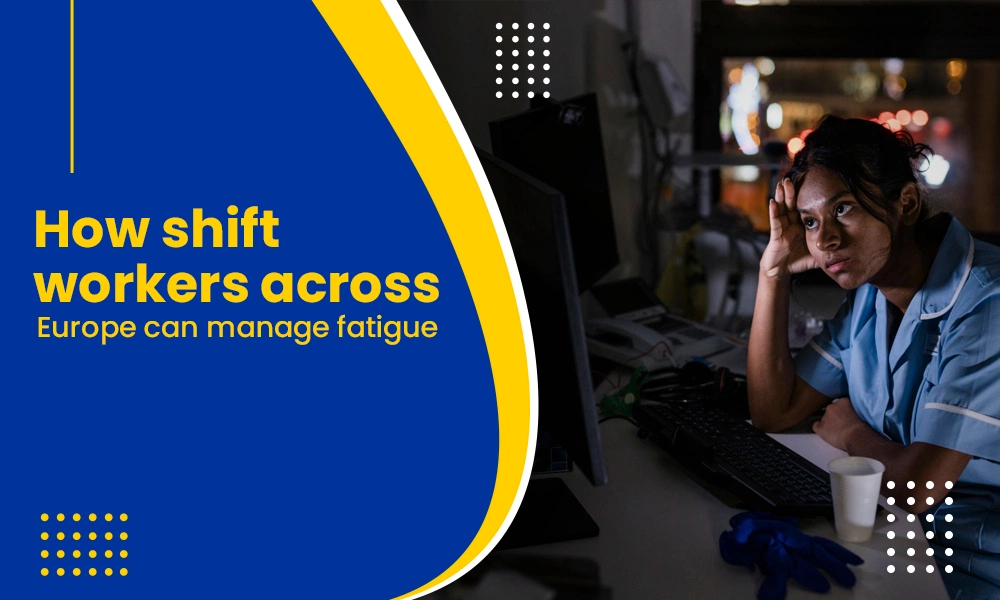
A lot of people across Europe work hours that just don’t line up with the usual 9-to-5. Healthcare staff, factory teams, warehouse crews, drivers, hotel workers, airport staff, emergency responders the list goes on. For Shift Workers Across Europe, that kind of schedule is just normal life, even if it never really feels normal on the body.
And honestly, that’s where the trouble starts. The human body likes routine more than most of us want to admit. Once sleep gets chopped up by late nights, early starts, or weekend changes, fatigue starts creeping in. Quietly at first. Then all at once.
Why it gets so draining
The big issue is that shift work keeps pulling people away from a steady sleep pattern. One week you’re on mornings, then suddenly you’re covering evenings, and maybe after that you’re back on nights. That kind of switch can be rough.
For many European Shift Workers, the hardest part is not just being awake at odd hours. It’s trying to sleep when the body still thinks it should be alert. Night shifts, long shifts, and broken rest days can all pile on. The result is often a mix of grogginess, poor focus, and that strange heavy feeling that doesn’t really go away.
A lot of Shift Work in Europe also involves longer commutes, busy cities, and jobs where you can’t just “take it easy” for a bit. So people keep going, even when they’re already running low.
What poor sleep does to you
Sleep deprivation is not subtle. People notice it in different ways, but the pattern is usually familiar.
You stop concentrating as well. Small mistakes start happening. Mood gets a bit flatter, or sometimes just irritable for no clear reason. And productivity drops, even if you’re trying harder than usual.
For Shift Workers in Europe, the consequences can spill into home life too. You’re tired on your days off, then you can’t fully reset, then work starts again. It becomes a loop.
That’s also why night shift workers often describe a kind of mental fog that feels hard to shake. It’s not just being sleepy. It’s slower reaction time, weaker memory, and sometimes a bit of emotional strain as well. In busy settings, that can matter a lot.
And yes, the risks can go beyond annoyance. In jobs where attention matters, poor sleep can increase the chance of workplace errors. That part is obvious, but people still tend to brush it off until something goes wrong.
A few things that actually help
There isn’t one magic fix, which is annoying but true. Still, some habits do make things a bit easier.
Try to keep a regular sleep routine where you can. It won’t always be perfect, especially with rotating shifts, but consistency helps more than most people expect. Even sticking to a similar wind-down routine can make a difference.
A dark, quiet sleep space helps too. Blackout curtains, earplugs, and an eye mask basic stuff, but useful. Daytime sleep is tricky, and the room often needs more help than you think.
Exercise can also support better rest, though not right before bed. A bit of movement during the day can help your body feel more ready for sleep later. Not intense, not fancy. Just enough to keep things from getting too sluggish.
Food matters more than people sometimes want to admit. Balanced meals with enough protein, fiber, and steady energy can help you avoid those huge dips. If you’re living on random snacks and caffeine, fatigue tends to get worse, not better.
Caffeine can help, but it can also backfire. Too much, or too late, and sleep gets even messier. That sounds obvious, but a lot of people still push it because they’re trying to stay functional. Fair enough. Just don’t let it become the whole strategy.
These are the basic bits of fatigue management, really. Not glamorous, not revolutionary, but they matter.
When sleepiness stops being “just the job”
Sometimes ongoing tiredness is more than shift work itself. If someone has persistent excessive daytime sleepiness, it may be worth looking at other causes. Things like Shift Work Sleep Disorder can be involved, and in some cases so can narcolepsy or other sleep-related conditions.
That’s where a healthcare professional comes in. If the sleepiness keeps showing up even when the schedule improves, or if it feels unusually severe, it shouldn’t just be written off as normal burnout. Shift workers across Europe may be used to feeling tired, but there’s a point where tiredness is no longer the full explanation.
It’s also worth paying attention if the sleepiness is affecting safety, driving, or basic daily function. That’s usually a sign to take it more seriously.
About wakefulness medicines
There are medicines such as Modafinil and Armodafinil that may be prescribed for certain diagnosed sleep disorders, but only under medical supervision. They are not meant to be a general fix for demanding work patterns, and they should not be treated like a casual energy boost.
That distinction matters. Some people hear about wakefulness medicines and assume they’re there to help anyone survive a rough shift pattern. That’s not really the point. They’re for specific cases, after proper assessment.
Night shift workers in Europe may hear about these treatments more often because tiredness is such a common topic, but the real message is simpler: medication should follow diagnosis, not replace sleep habits, and not be used as a shortcut for chronic overwork.
Making the routine less brutal
A lot of Shift Workers Across Europe are basically trying to solve the same problem in slightly different ways. How do you stay alert at work, sleep enough, and still have some kind of life outside it? Not easy. Sometimes not even close.
The honest answer is that some weeks will still be messy. Some shifts will still wipe you out. But getting a bit more serious about sleep, food, light, rest, and medical support when needed can make the whole thing less punishing.
And maybe that’s the real point. Not perfect energy. Just less drag.
If fatigue keeps building, or sleepiness starts to feel abnormal, it’s worth talking to a doctor. Sometimes the issue is the schedule. Sometimes it’s something else. Either way, ignoring it usually doesn’t help.
Frequently Asked Questions
1. What is the biggest problem with shift work?
It usually throws off sleep timing, which leads to tiredness and poor focus.
2.Can shift work cause long-term fatigue?
Yep. Especially if you’ve been sleeping irregularly for a long time.
3. How can night workers sleep better?
Keep the room dark, quiet, and cool, and try to sleep at a steady time.
4. Does Artvigil 150mg stimulate just like tea or coffee?
No. Absolutely not. It does not contain caffeine. The medication works with your brain chemicals and delivers long-term awareness.
5. Does Artvigil 150mg have any side effects?
Yes. The common side effects are nausea, headache, insomnia, dizziness and so on. However, this medication is safe. You need to consult with your doctor or any healthcare professional before taking tablets. It is not suitable for regular basis.